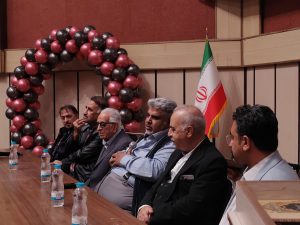

The Textile Industry of Yazd in Different Islamic Eras, Especially During the Safavie Period. The textile industry in Yazd has held a prominent position throughout various Islamic periods, particularly during the Safavie era. During this time, efforts were made to establish a class of artisans, both weavers and designers, in Yazd province. The remnants from these periods vividly reflect the prosperity and special significance of the industry. Today, the textile industry remains highly active and produces approximately 40% of the country’s textile products. This success has prompted private sector stakeholders to focus on creating a dedicated textile hub in the region.
The Textile Industry of Yazd
The textile industry in Yazd reached its peak during the Safavie period, enjoying its most prosperous phase in both textile manufacturing and weaving. Its growth was so significant that Yazd became one of the country’s foremost textile centers. The province has consistently been at the forefront of artistic creation, producing some of Iran’s most beautiful masterpieces. The textile industry in Yazd can once again emerge as a powerful force, leveraging the scientific expertise and accumulated knowledge of its intellectuals.

As a traditional and authentic industry, Yazd’s textile sector has not only a long history but has also experienced remarkable progress and development. It is safe to claim that its growth and development have been highly significant. According to statistics from the Yazd Industrial and Mining Organization, the textile industry currently accounts for nearly 40% of the province’s industrial employment, 25% of the total employment in Yazd, and 14.8% of the province’s total industrial investment. Consequently, it is crucial for local authorities to give special attention to this industry, encourage students to pursue careers in this field, establish more factories throughout the province, and create greater incentives to address the shortage of skilled local labor.
Challenges Facing the Textile Industry in Yazd
The challenges faced by Yazd’s textile industry are not related to the creation of a special economic zone, customs exemptions, or even issues with textile machinery such as weaving machines, spinning devices, and others. Rather, the industry’s main issue lies in the lack of proper marketing strategies. A key problem is the insufficient recognition of professional market strategies and customer engagement. The potential of Yazd’s textile industry is vast, with high-quality production and a dedicated workforce. However, to fully capitalize on this potential, it is necessary to better understand the regional and global market dynamics and adjust strategies to benefit from them.
The industry must diversify its product offerings and ensure high-quality standards in line with market demands. Every country involved in the textile sector invests heavily in it, and those that succeed do so by conducting proper marketing and market research to ensure profitability.
If Yazd’s textile industry aims to be revitalized and remain competitive on a global scale, it must diversify its products to capture the market share. With nearly a century of history, this profitable industry must not be allowed to fade. While neighboring countries have been active in this sector for less than 40 years, they are now surpassing Iran in terms of progress. There is a pressing need to train skilled professionals and foster continuous innovation in the industry.
Ideh Gostar Sanat Company
Ideh Gostar Sanat Company is proud to have contributed to the growth and development of Yazd’s textile industry through years of productive activity, helping to achieve the aforementioned objectives.